
What is Gnosticism? A Guide to Hidden Knowledge
Top 10 Takeaways from this Page (Incase you are in a hurry)
1️⃣ The god of mainstream religion is a false god. The Demiurge (Yahweh, the god of the Bible) is not the true divine source—he is a deceptive being who created this world to enslave souls.
2️⃣ This world is an illusion. The material world is a prison designed to trap humanity in ignorance, suffering, and false beliefs.
3️⃣ Gnosis (knowledge) is the path to liberation. Unlike mainstream religion, which demands blind faith, Gnosticism teaches that true salvation comes from direct, personal knowledge of reality.
4️⃣ The divine spark is within you. You are not a flawed sinner who needs saving—you are a fragment of the true divine source, temporarily trapped in this false reality.
5️⃣ Jesus was a Gnostic teacher, not a savior. The true teachings of Jesus (found in texts like the Gospel of Thomas) reveal that he came to awaken people to the illusion, not to start a religion.
6️⃣ The Church erased Gnosticism to maintain control. Gnostic texts were banned, destroyed, and labeled as heresy because they taught that people don’t need priests, churches, or scripture to connect with the divine.
7️⃣ Faith is a tool of enslavement. Religion tells people to “just believe” and obey without question because questioning leads to freedom from the Demiurge’s illusion.
8️⃣ Sophia’s fall mirrors the human experience. The story of Sophia (Wisdom) falling into the lower realms and seeking redemption represents the journey of the soul waking up and returning to its true source.
9️⃣ The Demiurge feeds on worship and obedience. Every prayer to him, every act of religious devotion, strengthens his control over humanity. The key to breaking free is to stop feeding him energy.
🔟 The truth is inside you, not in a book or a church. Everything you need to know is already within—you just have to wake up, seek knowledge, and break free from the illusion.
Final Thought: The more you question, the more you see through the lies. The moment you stop looking for truth outside yourself and start seeking within, you begin the path to real enlightenment. 🚀
Introduction
If you’re here, chances are you’ve felt it—that nagging feeling that something about the world, about religion, about everything we’ve been told just doesn’t add up. I know that feeling well because I’ve been there.
I grew up in the Jehovah’s Witnesses, believing I had all the answers. By the time I was 18, though, I realized it was all wrong. That realization came alongside a powerful supernatural experience—something I can only describe as an encounter with God. But instead of leading me to real truth, it sent me running straight into Pentecostal Christianity. I thought, “Well, this must be where I belong.” Spoiler alert: it wasn’t.
For over a decade, I was a Born Again Christian, convinced I was finally on the right path. Then, at 30, I walked away from all organized religion because I saw it for what it was—a control system designed to keep people in line. The Bible, church doctrine, religious authority—it all started to look toxic and hollow.
But here’s the thing: even after all that, I still couldn’t shake the sense that something divine was real. I just knew it had nothing to do with the god I was taught to worship. That’s when I discovered Gnosticism, and suddenly, everything clicked. It was like finding a hidden puzzle piece that had been missing all my life.
So what exactly is Gnosticism? Well, it’s not a religion—it’s something much older, much deeper, and much more dangerous to those in power. Gnosticism teaches that the world we live in is an illusion, controlled by a false god—a Demiurge—who keeps humanity trapped in ignorance. It tells us that salvation doesn’t come from obedience, faith, or a church—it comes from knowledge (or as the ancient Gnostics called it, gnosis).
This guide will take you through what Gnosticism really is, where it came from, what it teaches, and why it’s been buried and suppressed for centuries. If you’ve ever questioned mainstream religion, if you’ve ever felt like the world is lying to you, or if you’re simply searching for truth beyond dogma, you’re in the right place.
Let’s dive in.
The Origins of Gnosticism
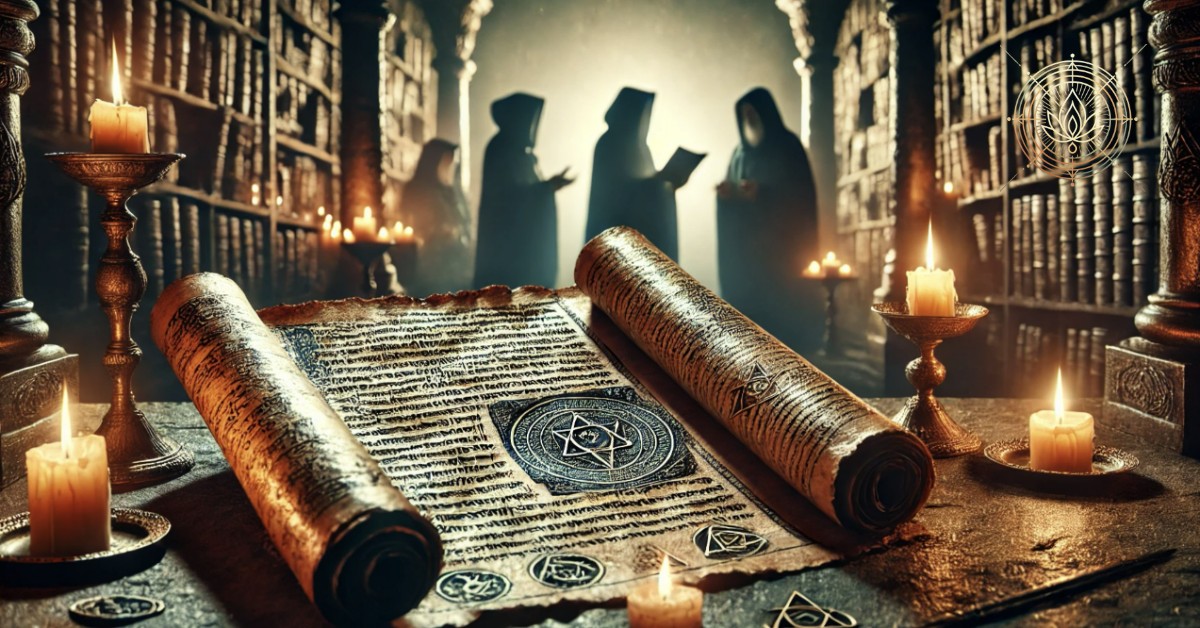
To understand Gnosticism, we have to go way back—before Christianity, before Judaism, before any of the mainstream religions we know today. Gnosticism isn’t some “new age” idea or a breakaway sect of early Christianity (like some scholars try to claim). It’s part of an ancient, hidden tradition that has appeared in various cultures throughout history.
The Roots of Gnosticism: Ancient Wisdom Lost and Found
Gnosticism didn’t just pop up out of nowhere. Its core ideas—like the belief that this world is an illusion and that true enlightenment comes from inner knowledge—can be found in multiple ancient traditions:
- Platonism (Ancient Greece) – The philosopher Plato spoke about a world of “forms” beyond our reality, much like the Gnostic idea that true existence lies beyond this material world.
- Zoroastrianism (Ancient Persia) – This religion described a battle between light and darkness, very similar to the Gnostic struggle between divine knowledge and the deception of the material world.
- Egyptian Mysticism – The idea of a “divine spark” hidden inside each person has echoes in Egyptian beliefs about the soul’s journey back to its source.
These ancient ideas came together in a powerful way during the first few centuries CE, when various Gnostic groups emerged, especially in the regions of the Mediterranean and the Middle East.
Gnosticism and Early Christianity: The Truth They Don’t Tell You
One of the biggest misconceptions about Gnosticism is that it was just an early Christian movement. The truth? Gnosticism existed before Christianity and was later adapted by some early Christians who saw Jesus as a teacher of hidden wisdom, rather than a savior demanding blind faith.
- Gnostic Christians believed that Jesus came to reveal secret knowledge, not to start a church. The Gospel of Thomas (one of the many suppressed Gnostic texts) portrays Jesus as a wisdom teacher, telling his followers that the Kingdom of God is found within—not in a temple, church, or priesthood.
- The mainstream Church saw this as a threat. The early Catholic leaders needed a religion that controlled people, not one that encouraged them to seek their own truth. So, Gnostic Christians were labeled as heretics, their scriptures were destroyed, and their teachings were buried—literally. (That is, until the Nag Hammadi Library was discovered in 1945, unearthing lost Gnostic texts that had been hidden away for centuries.)
The Suppression of Gnosticism: Why They Wanted It Gone
The early Catholic Church wasn’t just against Gnosticism—it went to war against it. The reason? Control.
- Gnosticism taught that you don’t need priests, churches, or holy books to connect with the divine. That was a direct threat to the growing power of the Church.
- Gnostic texts like the Gospel of Judas completely flipped the script on traditional Christianity, portraying Judas as the one who truly understood Jesus, rather than the villain mainstream religion made him out to be.
- Unlike mainstream Christianity, which demanded faith, obedience, and submission, Gnosticism encouraged questioning everything—including religious authority.
This was unacceptable to those in power. So, by the 4th century CE, the Roman Empire (which had now “converted” to Christianity) declared Gnostic writings heretical, banned them, and made sure only the Church-approved version of Christianity survived.
But despite their efforts, Gnosticism never truly died. The hidden knowledge was preserved in secret, influencing mystical traditions across time. And today, with the discovery of lost texts and the rise of people questioning religion more than ever, Gnosticism is making a comeback.
Because truth—real truth—can never stay buried forever.
Core Beliefs of Gnosticism

Gnosticism isn’t just about rejecting mainstream religion—it’s about discovering a deeper, hidden reality that has been kept from us. Unlike traditional faiths that demand obedience, Gnosticism teaches that salvation comes through knowing—not believing. It’s about waking up to the truth that this world is an illusion, and we are trapped in it.
So, what do Gnostics actually believe? Let’s break it down.
The Divine Spark: The Truth Hidden Inside You
Gnosticism teaches that inside each of us is a piece of the true divine realm—a spark of something greater. This idea is radically different from mainstream religions, which tell us we are flawed, sinful, and need saving.
- The divine spark is a fragment of the true God (not the false god who created this world).
- It is buried deep within us, hidden beneath layers of deception and ignorance.
- Our goal in life is to awaken this spark through gnosis (direct knowledge of the truth).
This means you don’t need a church, a priest, or a set of religious rules to “connect” with the divine. You already are divine—you just don’t remember it yet.
The Illusion of the Material World: We Are Living in a False Reality
Gnostics believe that this world is a trap—a prison for the soul, designed to keep us asleep and unaware of our true nature. This might sound like something out of The Matrix, but it’s an idea that has been around for thousands of years.
- The material world is a false creation, built by a lesser god (the Demiurge) to keep us enslaved.
- Everything in this world—our desires, suffering, and even time itself—is part of the illusion.
- Our real home is beyond this world, in the Pleroma (the realm of true divine existence).
Think about it: Why does life feel so full of suffering? Why does mainstream religion tell us to just “accept” our struggles as part of God’s plan? Because this world wasn’t made for our benefit—it was made to trap us.
But the good news? You can escape. The way out is through knowledge, not blind faith.
Gnosis Over Faith: Why Knowledge is the Only True Salvation
Unlike Christianity, which teaches that faith alone will save you, Gnosticism says that only gnosis (direct knowledge of the truth) can free you from this false reality.
- Faith = Accepting what you’re told without question.
- Gnosis = Experiencing truth for yourself.
Gnosis isn’t about reading holy books or listening to priests—it’s about awakening to the deeper reality that has been hidden from you. That’s why Jesus, in the Gospel of Thomas (a Gnostic text), says:
“Whoever finds the interpretation of these sayings will not experience death.”
That doesn’t mean you’ll live forever physically—it means you will awaken to the truth and escape the cycle of deception.
The Role of Sophia: The Lost Wisdom of the Divine Feminine

In mainstream religion, the feminine is usually downplayed, suppressed, or outright demonized. But in Gnosticism, Sophia (Greek for “wisdom”) is one of the most important figures in the entire story of creation.
- Sophia was a divine being who fell from the Pleroma and became trapped in the lower realms.
- Her fall led to the creation of the Demiurge (the false god who rules this world).
- She is the mother of the divine spark within us, and her wisdom helps guide us back home.
This is a far cry from traditional Christianity, which tells us that Eve (a symbol of wisdom and awakening) was the cause of humanity’s downfall. Gnosticism flips the script—Sophia wasn’t a sinner, she was a seeker, just like us.
And just like Sophia, we must find our way back to true knowledge.
So, What Does This Mean for You?
If you’ve ever felt like something isn’t right about the world, like you don’t belong here, or like religion is feeding you lies, you’re not crazy—you’re waking up.
Gnosticism teaches that:
✅ You are more than just a physical being—you have a divine spark.
✅ This world is an illusion designed to keep you spiritually asleep.
✅ Salvation comes through knowing, not believing.
✅ True enlightenment is found within, not in a church, book, or religious leader.
The next step? Understanding who is keeping us trapped here—and why.
In the next section, we’ll uncover the Demiurge, the false god who runs this world, and how religions serve him—not you.
The Demiurge: The False God Who Runs This World

If you’ve ever looked at the world and thought, Something is seriously wrong here, you’re not alone. War, suffering, greed, oppression—it’s everywhere. And what do mainstream religions tell us? Trust in God, obey, have faith—it’s all part of His divine plan.
But what if the god they worship isn’t really God at all?
This is one of the most radical (and dangerous) ideas in Gnosticism: The god of the Bible—the one worshipped in Christianity, Judaism, and Islam—is not the true, benevolent creator. Instead, he’s an impostor—a false god—who rules this world like a tyrant. This being is known as the Demiurge.
Who (or What) is the Demiurge?
The Demiurge is the architect of the material world—the being that created everything we see, touch, and experience. But unlike the true divine source, the Demiurge is:
- Jealous – He demands worship and punishes those who don’t obey.
- Cruel – He allows suffering, disease, and war.
- Deceptive – He manipulates people into thinking he is the one true God.
Sound familiar? The god of the Old Testament has all these traits. The Gnostics saw Yahweh—the god of Abraham, Moses, and the prophets—as none other than the Demiurge himself.
The true divine source (sometimes called the Monad or the Invisible Father) is beyond all of this. The Monad is pure, unknowable, and nothing like the god religions teach us about. But the Demiurge? He wants to keep us trapped in his creation, feeding him worship and obedience like slaves in a prison we don’t even realize we’re in.
How the Demiurge Keeps Humanity Trapped
The Demiurge doesn’t work alone. He has helpers, called Archons—dark, controlling forces that influence our world. These Archons operate through:
🔴 Religions – Designed to keep people obedient, fearful, and spiritually blind.
🔴 Governments – Systems of control that manipulate people through fear and division.
🔴 Material Desires – Keeping us distracted with wealth, power, and meaningless pleasures.
This world is his kingdom, and he wants to keep it that way. That’s why religions demonize knowledge—because knowledge is the key to escaping the illusion.
Think about it:
- Why was Eve condemned for eating from the Tree of Knowledge?
- Why was Jesus killed for preaching a message that challenged religious leaders?
- Why are people who seek truth labeled as heretics, rebels, or conspiracy theorists?
Because knowledge is power, and power threatens the Demiurge’s rule.
Jesus, the Gnostic Rebel
Here’s where things get really interesting. While mainstream Christianity teaches that Jesus came to “save us from sin,” Gnostics believed he came to wake us up from the Demiurge’s illusion.
- Jesus didn’t preach obedience—he taught people to seek the truth within.
- He said, “The kingdom of God is within you.” (Luke 17:21)
- The Gnostic Gospel of Judas reveals that Jesus actually mocked the disciples for worshipping the false god of this world.
And guess who had him executed? The religious authorities. The same ones who claimed to serve “God.”
What This Means for You
If the god of the Bible is actually the Demiurge, then what does that mean for those who worship him?
It means they’re trapped in his game—blindly following a god who demands obedience, faith, and submission while never offering any real answers.
It also means that true salvation doesn’t come from worship—it comes from knowledge. The more you learn, the less power the Demiurge has over you.
So, if you’ve ever felt like religion was suffocating you, if you’ve ever sensed that something was “off” about the world, you’re not crazy. You’re waking up.
And once you see the illusion for what it is, you can never go back.
In the next section, we’ll dive into the Gnostic texts that reveal the truth mainstream religions tried to bury.
Key Gnostic Texts and Their Teachings
If Gnosticism is so important, why don’t we hear about it in mainstream religion? Simple—because those in power did everything they could to erase it.
Early Christian leaders called Gnostic teachings heretical. They burned books, destroyed libraries, and silenced those who dared to question. But truth has a way of surviving, even when people try to bury it.
In 1945, a discovery changed everything: the Nag Hammadi Library—a collection of ancient Gnostic texts hidden away for centuries in Egypt. These writings revealed a completely different version of spirituality than what we’ve been told.
Let’s explore some of the most powerful Gnostic texts that expose the lies of mainstream religion and reveal hidden truths about the universe, the soul, and the false god who runs this world.
The Nag Hammadi Library: A Lost Treasure of Gnosis

The Nag Hammadi texts are not part of the Bible (for obvious reasons—they contradict almost everything the Church teaches). This collection of manuscripts includes writings from the early Gnostics that challenge the idea of a jealous, wrathful god and reveal the true nature of enlightenment.
Among these texts, some stand out as absolute game changers for understanding reality.
The Gospel of Thomas: The Secret Sayings of Jesus
Imagine if Jesus never came to start a religion, never demanded faith, and instead taught people that the kingdom of God was within them all along. That’s exactly what the Gospel of Thomas reveals.
This text, unlike the four gospels in the Bible, doesn’t tell a story—it’s a collection of 114 sayings attributed to Jesus, many of which sound radically different from traditional Christian teachings.
🔹 Key Teachings from the Gospel of Thomas:
- “If you bring forth what is within you, what you bring forth will save you.” (Gospel of Thomas, Saying 70)
- “The kingdom of God is inside you and all around you, not in buildings of wood and stone.” (Saying 3)
- “Whoever finds the interpretation of these sayings will not taste death.” (Saying 1)
This gospel makes it clear: Jesus wasn’t preaching about a god to worship—he was showing people how to wake up.
So why isn’t this in the Bible? Because it threatens the entire foundation of organized religion.
The Gospel of Judas: Flipping the Script on Betrayal
You’ve heard the story—Judas Iscariot, the disciple who betrayed Jesus for thirty pieces of silver. But what if that’s not the real story?
The Gospel of Judas, another banned Gnostic text, tells a completely different version of events. In this account:
- Judas wasn’t a traitor—he was the only disciple who truly understood Jesus.
- Jesus told Judas that he would have to “betray” him so that he could escape the material world.
- The other disciples were blind followers who didn’t grasp Jesus’ real message.
This completely undermines the foundation of Christianity because it suggests that Jesus’ mission wasn’t about dying for sins—it was about exposing the illusion of the material world.
And once again, we see the Church’s pattern of twisting the truth to fit its narrative.
The Secret Book of John: The True Story of Creation

If you think the biblical creation story is the full truth, think again. The Secret Book of John tells a very different version of events—one that makes a lot more sense if you’ve ever wondered why the world is so broken.
🔹 What It Reveals:
- The true God (the Monad) is beyond human comprehension—he didn’t create this world.
- The Demiurge (Yaldabaoth) is a flawed, arrogant being who stole divine power and created the material world as a prison.
- Sophia, a divine feminine being, accidentally gave birth to the Demiurge, who then trapped souls in physical bodies.
This version of creation exposes Yahweh as a deceiver—a jealous god who pretends to be the ultimate authority but is actually keeping humanity enslaved.
The Pistis Sophia: The Journey of the Fallen Soul
Sophia (meaning “wisdom”) plays a huge role in Gnostic thought, and The Pistis Sophia is a text that tells her story of redemption—which is really the story of us all.
Sophia:
- Was once a divine being who fell from grace after trying to create without the true God’s permission.
- Ended up trapped in the lower realms (our material world).
- Eventually realized her mistake, sought knowledge, and worked her way back to the divine source.
This mirrors the human experience—we are all fragments of divine light, trapped in this illusion, trying to find our way back home.
The story of Sophia is really the story of our own awakening.
Why These Texts Were Suppressed
So, why were these texts hidden for nearly 2,000 years? Because they:
🚫 Expose the Demiurge as a false god.
🚫 Teach that salvation comes from knowledge, not faith.
🚫 Prove that you don’t need a church, priest, or book to connect with the divine.
The Church’s entire system depends on keeping people ignorant, obedient, and fearful. Gnosticism breaks that system wide open.
What This Means for You
If you’ve ever questioned mainstream religion, if you’ve ever felt that the world is not what it seems, these Gnostic texts offer an alternative—a path to true knowledge and freedom.
They confirm what so many of us have already sensed:
✅ The god of mainstream religion is a false god.
✅ We are trapped in an illusion but have the power to break free.
✅ The true divine realm exists beyond this world.
But knowing this isn’t enough. The next step is awakening—and that’s where Gnosticism differs from traditional religion.
In the next section, we’ll explore why faith alone will never set you free—and why direct knowledge (gnosis) is the key to escaping the illusion.
Gnosticism vs. Mainstream Religion: The Truth They Don’t Want You to Know

By now, you’ve probably noticed something: Gnosticism and mainstream religion don’t mix. In fact, they’re complete opposites.
While traditional Christianity (along with Judaism and Islam) is built on faith, obedience, and submission, Gnosticism is about knowledge, awakening, and liberation.
This section will break down the key differences between Gnosticism and mainstream religion, why the Church hates Gnosticism so much, and how religious systems enslave people under the rule of the Demiurge.
Why Gnosticism Rejects Organized Religion
Gnosticism doesn’t just reject certain religious ideas—it rejects the entire system of religious control. Here’s why:
|
Mainstream Religion |
Gnosticism |
|
Worship a God who demands obedience |
Seek direct knowledge of the divine |
|
Faith is required, even without proof |
Truth is found through experience |
|
Salvation comes from belief and obedience |
Salvation comes from awakening |
|
Priests, churches, and holy books hold the truth |
Truth is inside you, not in institutions |
|
Fear of punishment (hell, sin, damnation) |
No eternal hell—only ignorance and enlightenment |
|
God is a ruler, king, and judge |
The true divine source is beyond human concepts |
Mainstream religion tells you that you need them to be saved. Gnosticism tells you they’re the ones keeping you lost.
The entire religious system is built on fear—the fear of sin, the fear of punishment, the fear of not being “good enough.” This keeps people in line and under control. But what happens if you remove fear from the equation?
You start asking questions.
And that’s exactly what the Church doesn’t want.
How Christianity Stole & Corrupted Gnostic Teachings
Christianity has spent centuries demonizing Gnosticism, calling it heresy. But here’s the funny thing: Christianity wouldn’t even exist without Gnosticism. Many of its core ideas were taken from older mystical traditions, then twisted to fit a control-based system.
For example:
- Jesus’ Teachings – The Gnostic Jesus taught that the “Kingdom of God is within you.” The Church turned him into a sacrificial figure that people must obey rather than learn from.
- The Soul’s Journey – Gnostics taught that the soul must awaken and escape the material world. Christianity turned this into “heaven vs. hell” to control behavior.
- The Divine Feminine (Sophia) – Gnosticism honored Sophia as a lost but powerful divine being. Christianity erased her completely, replacing her with a submissive Virgin Mary.
Christianity is Gnosticism rewritten as a fear-based religion, stripping away its true meaning and replacing it with a power structure designed to keep people docile.
The Psychological Control of Faith
Faith sounds like a good thing, right? That’s what religion teaches. But in reality, faith is just another word for obedience.
Faith means:
❌ Don’t question what you’re told.
❌ Don’t seek answers outside the Church.
❌ Don’t trust your own experiences—trust the “Word of God.”
Why? Because the moment you stop having blind faith is the moment you start thinking for yourself. And the moment you start thinking for yourself, you begin to see the cracks in the system.
That’s why religions villainize knowledge. The story of Adam and Eve, for example, is really about punishing humanity for seeking wisdom. The Church doesn’t want seekers—it wants followers.
But Gnosticism flips the script:
✅ Knowledge is the path to freedom.
✅ Seeking answers isn’t evil—it’s necessary.
✅ The real sin is staying ignorant.
Why the Demiurge Needs Religion to Survive

If the Demiurge (the false god) created this world, then why do religious people feel so connected to him? Simple—because he’s designed religion to worship him.
- He wants obedience.
- He wants followers to bow before him.
- He wants people to see him as the only way to salvation.
The more people worship him, the more powerful he becomes.
That’s why the most religious people are often the most fearful, guilt-ridden, and spiritually blind. They’re trapped in the Demiurge’s illusion, constantly obeying a god who keeps them in spiritual chains.
But the moment you stop worshipping him, his power over you vanishes.
Gnosticism doesn’t ask you to replace one god with another—it asks you to see through the illusion and free yourself.
What This Means for You
If you’re waking up to the truth, it means:
✅ You don’t need a religion to connect with the divine.
✅ The god of the Bible is not the true god.
✅ Faith is just another form of control.
✅ Knowledge—not obedience—is the path to true freedom.
This is why Gnosticism was erased from history—because it frees people from the prison of religious control.
But now that you know the truth, what do you do with it?
The Path to Gnosis: How to Awaken
By now, you’ve seen the truth—this world is an illusion, controlled by the Demiurge, and mainstream religion is part of the trap. But knowing this isn’t enough. Gnosticism isn’t just about understanding the problem; it’s about breaking free from it.
So, how do you actually awaken? How do you escape the deception of the material world and reclaim your divine knowledge?
That’s where gnosis comes in.
Unlike faith, which demands blind obedience, gnosis is direct knowledge—personal, undeniable experience of truth. And once you have it, you can never be controlled again.
In this section, we’ll explore how to develop gnosis, how to break free from the Demiurge’s illusion, and what steps you can take to reclaim your divine spark.
Stop Worshiping the False God
The first and most important step is simple: stop giving your energy to the Demiurge.
- Do not fear him. Fear is his greatest weapon.
- Do not obey him. He thrives on control.
- Do not worship him. Every prayer, every ritual, every act of devotion feeds his power.
Religion conditions people to depend on an external god for salvation. But Gnosticism teaches that you don’t need an external savior—because the divine spark is already inside you.
The moment you realize this, you take your power back.
Seek Knowledge, Not Faith
If there’s one thing the Demiurge hates, it’s people thinking for themselves. That’s why religious systems are built on faith—because faith stops people from asking questions.
But gnosis is the opposite of faith. It’s about actively seeking truth.
🔹 Ways to develop gnosis:
✅ Read the banned texts – The Nag Hammadi Library, Gospel of Thomas, Gospel of Judas, and other Gnostic scriptures contain knowledge mainstream religion tried to suppress.
✅ Question everything – If something doesn’t make sense, don’t ignore it. Investigate it.
✅ Look beyond the Bible – Many ancient traditions (Hinduism, Buddhism, Hermeticism) hold pieces of the same truth. The Demiurge’s deception exists across cultures, but so does knowledge.
Gnosis isn’t about believing—it’s about knowing. And the more you seek, the more you uncover.
Develop Inner Awareness
One of the biggest lies we’ve been told is that truth is out there—in churches, in scriptures, in religious leaders. But the real truth?
Everything you need is already inside you.
The divine spark within you is like a compass. It knows the way home—you just have to learn how to listen.
🔹 Practices for awakening inner knowledge:
✅ Meditation – Quiet your mind and connect with your higher self. The more you do this, the clearer your intuition becomes.
✅ Lucid dreaming & astral projection – Many Gnostics believed that the soul can travel beyond this world in altered states of consciousness. Exploring this can lead to direct experiences of gnosis.
✅ Self-inquiry – Ask yourself, Who am I really? Why am I here? What is my true nature? The more you dig, the more the illusion unravels.
The Demiurge keeps us distracted—through fear, through material desires, through constant mental noise. Silence that noise, and the truth will reveal itself.
See Through the Illusion of the Material World
Gnosticism teaches that this world is a prison, and everything in it is designed to keep you asleep. To wake up, you have to see the illusion for what it is.
🔹 Signs you’re still caught in the Demiurge’s trap:
🚨 You believe happiness comes from money, status, or material success.
🚨 You let fear or guilt control your actions.
🚨 You obey religious, political, or societal rules without questioning them.
Once you see the illusion, you stop playing by its rules. You realize that:
✅ You are not your body.
✅ You are not your thoughts.
✅ You are something far greater than what this world tells you.
Escaping the illusion isn’t about running away or rejecting life—it’s about seeing through the deception and choosing a higher path.
Find Others Who See the Truth
The journey to gnosis can feel lonely. When you wake up, you realize that most people are still asleep.
But you’re not alone. There are others who see through the illusion, others who reject the Demiurge’s lies, others who are seeking the same hidden knowledge you are.
Find them. Connect with them. Share what you’ve learned.
Gnosis is a personal path, but awakening is easier when you’re not walking it alone.
What This Means for You
If you’re reading this, it means you’re already starting to wake up. You wouldn’t be here if you weren’t already questioning the illusion.
And that’s exactly how it starts.
You don’t need faith—you need knowledge.
You don’t need obedience—you need awareness.
You don’t need a god to save you—you need to remember who you are.
This is what the Gnostics knew. This is why they were silenced. And this is why the truth is still alive today.
The next step is up to you. Will you go back to sleep? Or will you seek the knowledge that will set you free?
Conclusion: The Truth That Sets You Free
If you’ve made it this far, something inside you is already waking up. Maybe you’ve felt it for a long time—that deep, nagging feeling that something about the world, about religion, about everything we’ve been told is wrong. And now you know why.
Gnosticism isn’t just another belief system. It’s the key that unlocks the door to everything mainstream religion has hidden from us. It exposes the Demiurge, the false god who rules this world. It reveals that salvation doesn’t come from obedience or faith—but from knowing.
The moment you stop worshiping the false god, stop playing by his rules, and start seeking knowledge, you take your power back.
What You Now Know:
✅ The god of mainstream religion is not the true God—he is the Demiurge.
✅ This world is an illusion, designed to keep you spiritually asleep.
✅ Salvation doesn’t come from faith—it comes from knowledge (gnosis).
✅ Your divine spark is already inside you—you just have to awaken it.
The real question is: What will you do with this knowledge?
Will you ignore it and go back to sleep? Or will you keep seeking, keep questioning, and keep waking up?
The choice has always been yours.
But now, you see the illusion for what it is. And once you see it, you can never unsee it.
The next step? Keep learning. Keep seeking. Keep questioning. Because the truth isn’t found in churches, in scriptures, or in religious leaders—it’s found within you.
10 FAQs About Gnosticism
1. What is Gnosticism in simple terms?
Gnosticism is an ancient spiritual tradition that teaches that this world is an illusion created by a false god (the Demiurge) to keep humanity trapped. The only way to escape is through gnosis—direct knowledge of the divine truth hidden within you.
2. Is Gnosticism a religion?
No, Gnosticism is not a structured religion. It has no official church, no required beliefs, and no single authority figure. Instead, it is a spiritual philosophy that encourages personal discovery and knowledge rather than obedience and faith.
3. Who is the Demiurge?
The Demiurge is the false god who created the material world. He is jealous, controlling, and demands worship. In Gnostic teachings, the Demiurge is often associated with Yahweh, the god of the Old Testament, and seen as the true enemy of spiritual enlightenment.
4. What is the difference between faith and gnosis?
- Faith is believing something without proof, often because a religious authority tells you to.
- Gnosis is direct, personal experience of truth—it’s something you know, not just something you believe.
Gnosticism teaches that faith keeps people enslaved, while gnosis sets them free.
5. Did Gnostics believe in Jesus?
Yes, but not in the same way mainstream Christianity does. Gnostics saw Jesus as a teacher of hidden wisdom, not a savior who died for sins. His real mission was to wake people up to the illusion of the material world, not to establish a religion.
6. Why was Gnosticism banned by the Church?
Because it was a threat to religious control. Gnosticism teaches that:
- You don’t need priests or churches to connect with the divine.
- The god of the Bible is actually a false god (the Demiurge).
- Salvation comes from knowledge, not obedience.
The early Catholic Church labeled Gnosticism as heresy, banned its texts, and persecuted its followers to eliminate competition.
7. What is the divine spark?
The divine spark is a fragment of the true God that exists within each person. It’s what makes us different from the Demiurge and his false creation. Gnosis is the process of awakening this spark and remembering who we really are.
8. Is there a heaven and hell in Gnosticism?
Not in the way mainstream religions teach. There is no eternal punishment or reward—only ignorance and enlightenment. The real goal isn’t to go to “heaven” but to escape the cycle of illusion and return to the true divine realm.
9. How can I start practicing Gnosticism?
You don’t “practice” Gnosticism like a religion—you live it as a path to awakening. Some steps include:
- Question everything—don’t accept beliefs blindly.
- Read the banned texts—The Gospel of Thomas, The Nag Hammadi Library, The Gospel of Judas.
- Meditate and reflect—seek direct inner knowledge.
- Stop feeding the Demiurge—reject fear, guilt, and religious control.
10. What happens when you achieve gnosis?
When you achieve gnosis, you see through the illusion. You realize that:
✅ The material world is not your real home.
✅ You are a fragment of the true divine source.
✅ You don’t need religion, faith, or external authority to be “saved.”
It’s spiritual liberation—a complete break from the false reality controlled by the Demiurge. And once you wake up, you can never go back to sleep.